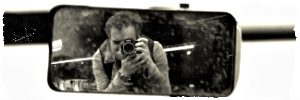

This post was created with help from AI.
Irwin D. Trenton, the seasoned Formula 1 journalist with a beard as wild as a Monaco hairpin, set off from the glittering Principality on his state-of-the-art e-bike, a sleek, neon-green contraption dubbed the “Thunderbolt 3000.” This wasn’t just any bike—it boasted a solar-powered espresso machine, a mini-fridge for vintage champagne, and a seat that, inexplicably, zapped Irwin’s bum with a rogue electric jolt every five miles. Undeterred, Irwin pedaled through the French Riviera, dodging rogue seagulls that dive-bombed him for his baguette stash and outrunning a pack of feral poodles led by a monocle-wearing dachshund named Pierre (after a certain French Formula 1 driver). Each zap from the Thunderbolt singed his trousers further, but Irwin, fueled by sheer grit and the dream of his next deadline, pressed on, muttering, “This story’s worth the scorch marks.”
As he crossed into Spain, the adventures grew wilder. Near Perpignan, Irwin was briefly kidnapped by a troupe of flamenco-dancing bandits who mistook him for a rival journalist with a scoop on their secret sangria recipe. He escaped by challenging their leader to a dance-off, twirling so furiously his e-bike’s shocks sparked a small forest fire. The Thunderbolt’s shocks kept coming, each one a fiery reminder of the 600-mile journey’s toll on his backside. By Girona, locals swore they saw a man pedaling a glowing bike, trailed by a faint smell of burnt corduroy and the echo of curses in three languages.
The final stretch to Barcelona was a gauntlet of absurdity. Irwin navigated a herd of roller-skating goats, a rogue AI traffic light that sang opera, and a freak hailstorm of olives that left his bike slicker than a wet chicane. The Thunderbolt’s shocks grew more vicious, as if the bike itself resented the journey, but Irwin’s resolve was ironclad—he had to make the Spanish Grand Prix to grill the drivers on their tire strategies. His bum, now a patchwork of singed skin and bruised pride, throbbed with every pedal stroke, yet he refused to quit, fueled by visions of his byline in lights.
Rolling into Barcelona’s Circuit de Catalunya, Irwin was a sight: trousers charred, beard smoldering, and a grimace that could spook a pit crew. Fans mistook him for a rogue stunt performer, chanting his name as he dismounted the cursed Thunderbolt, wincing with every step. His sore bum was the talk of the paddock, but Irwin, ever the pro, will have filed his story—complete with exaggerated tales of his electrified odyssey—before collapsing into a chair, vowing never to trust an e-bike again. The drivers’ tire choices or flexi-wings? Dull by comparison.

PREVIEW
The 2025 Spanish Grand Prix, set for May 30 to June 1 at the Circuit de Barcelona-Catalunya, promises to be a pivotal race in the Formula 1 season, the ninth of 24 Grands Prix. With McLaren leading both the Drivers’ and Constructors’ Championships—Oscar Piastri narrowly ahead of Lando Norris by three points, and Max Verstappen 25 points behind—Barcelona’s 4.657km track, known for its mix of high-speed corners and heavy braking zones, will test car balance and tire strategy. Historically, pole position has been key, with seven of the last ten races won from the front, and tire management often trumps raw pace due to the track’s abrasive surface. The tight championship battle, with Ferrari’s Charles Leclerc and Lewis Hamilton, plus Mercedes’ George Russell, still in contention, makes this race critical, especially as new technical regulations could shake up the pecking order.
A major talking point is the FIA’s clampdown on flexible front wings, enforced via Technical Directive TD018 starting at this race. Flexi-wings, which bend under aerodynamic load to reduce drag on straights while maintaining downforce in corners, have been controversial, with McLaren, Mercedes, Ferrari, and Red Bull exploiting them in 2024. The new rules reduce permissible front wing deflection from 15mm to 10mm under static load tests, a 33% stiffer requirement, alongside stricter checks on “fish plates” and flap stiffness (60N force perpendicular to the flap). This follows earlier rear wing restrictions tightened at the Chinese Grand Prix, where slot gap variation was slashed from 2mm to 0.5mm. The FIA’s aim is to eliminate aeroelasticity debates, ensuring a level playing field.
The flexi-wing saga stems from 2024, when McLaren’s “mini-DRS” rear wing in Azerbaijan sparked rival complaints, particularly from Red Bull and Ferrari, who later adopted similar designs with mixed success. The FIA’s initial reluctance to change rules shifted after extensive data collection, including cameras monitoring wing movement, revealed teams pushing deflection limits. Ferrari’s Fred Vasseur called the changes a potential “gamechanger,” while Red Bull’s Christian Horner noted the odd timing—mid-season at race nine—forces teams to run dual wing specs. McLaren’s Zak Brown downplayed the impact, claiming compliance, but rival teams suspect McLaren’s pace could suffer most, given their 2024 dominance using flexible wings.
The clampdown’s effect is hard to predict. Ferrari, prepared with a new front wing, seems confident, while Red Bull, frustrated by the delayed implementation, fears teams may exploit current rules until June. Paddock chatter reflects mixed sentiments: Jos Verstappen supports the change for fairness, but some experts believe teams like McLaren can still bypass tests with clever designs. The directive could alter car balance, tire wear, and straight-line speed, potentially reshaping the grid. Barcelona’s track, a benchmark for car performance, will reveal who adapts best, with Verstappen’s three-year win streak here under threat if Red Bull’s upgrades lag.
For bettors and fans, the Spanish Grand Prix offers intrigue. McLaren’s low-speed edge suits the track’s layout, but Verstappen’s racecraft and tire management make him a favorite at +150 odds, per recent analyses. Long shots like Russell (+2000) could capitalize if Mercedes nails tire warm-up. The flexi-wing changes add uncertainty, with teams facing a tight window to redesign wings under the budget cap. As Irwin D. Trenton, our singed-bum journalist, might note, the paddock buzz will rival the race itself, with every team’s garage under scrutiny for compliance and performance. Expect a weekend where strategy, adaptation, and raw pace collide.
REVIEW (COMING ON MONDAY)
And the winner was…
Ladies and gents, we’re happy to announce that Irw’s bum is doing fabulous. Here’s the report he has filed from his space-age kayak in the middle of the Mediterranean Sea, on his way to Canada. Yes, he’s kayaking all the way to Canada, however we’ll talk about it in the next post. Stay tuned, don’t miss an Iberian tidbit.
The 2025 Formula 1 Spanish Grand Prix, held on June 1 at the Circuit de Barcelona-Catalunya, delivered a thrilling showcase of McLaren’s dominance, with Oscar Piastri storming to victory from pole position and leading teammate Lando Norris to a 1-2 finish. Piastri’s fifth win of the season extended his Drivers’ Championship lead to 10 points over Norris, underlining McLaren’s strong form. Charles Leclerc secured third for Ferrari, capitalizing on a late-race penalty to Red Bull’s Max Verstappen, who dropped to P10 after a 10-second sanction for a contentious collision with Mercedes’ George Russell. Nico Hulkenberg’s impressive fifth for Kick Sauber, his best result since 2019, highlighted the midfield’s competitiveness.
Drama peaked in the final laps as Verstappen’s aggressive move on Russell sparked controversy, with the penalty reshaping the order and fueling debates about racing etiquette. McLaren’s pace remained unhindered by the FIA’s new flexi-wing directive, defying expectations of a performance dip and strengthening their Constructors’ Championship grip. Meanwhile, Williams endured a nightmare, with Alex Albon retiring after double front wing damage, and Lance Stroll sat out due to ongoing hand and wrist issues. Fernando Alonso gave the home crowd a lift, scoring his first points of 2025 in ninth for Aston Martin.
Lewis Hamilton, in his scarlet Ferrari, took sixth, just ahead of rookie Isack Hadjar in seventh for Red Bull. The race exposed varying fortunes, with McLaren’s consistency contrasting Red Bull’s struggles and Ferrari’s mixed results, setting the stage for a compelling next chapter.
Looking to the Canadian Grand Prix on June 15 at Circuit Gilles-Villeneuve, expect McLaren to carry momentum to a track favoring speed and bravery, though Montreal’s variable weather could shake things up. Verstappen, now 49 points behind Piastri, needs a clean, strong rebound to stay in the title hunt. Ferrari will aim to challenge for the podium, while Alonso and Aston Martin hope upgrades bridge the gap to the leaders. With Colapinto gaining experience and potential rain in play, Canada promises tight racing and strategic twists.

 iberianmph.com